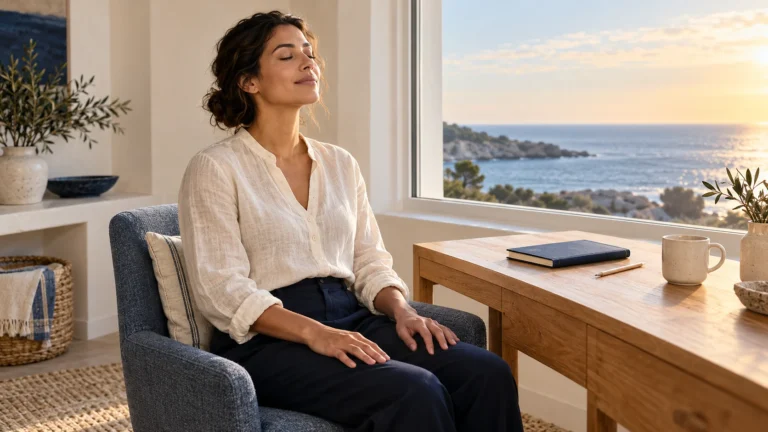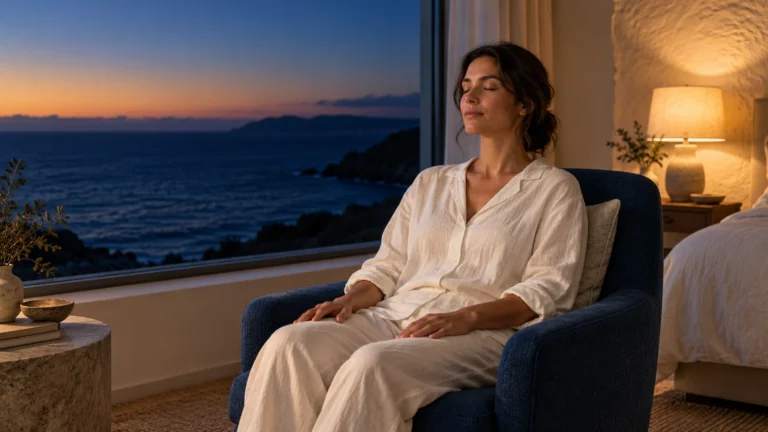

Some nights, you feel ready to stop for the day, but your thoughts are still moving. Breathing exercises for better sleep can give you a simple way to wind down: a comfortable position, an easy rhythm, and a few minutes without another task to finish.
This guide introduces three options for your evening routine. Start with one that feels manageable, use the demonstrations to learn the pattern, then put the screen aside. The aim is a quieter pause, without making sleep something you have to achieve on command.
Before you begin
Choose a comfortable place to sit with your back supported. Let your shoulders settle and take a few ordinary breaths. You can keep your eyes open or close them gently.
Keep the breath easy. If an exercise causes dizziness, breathlessness, pain, or increasing anxiety, stop and return to your usual breathing. Seek medical advice for symptoms that concern you. If you have a heart or breathing condition, or are unsure about breath-holding, check with your healthcare professional before trying a counted exercise. The British Heart Foundation’s breathing guidance includes advice on practicing safely.
1. Gentle belly breathing
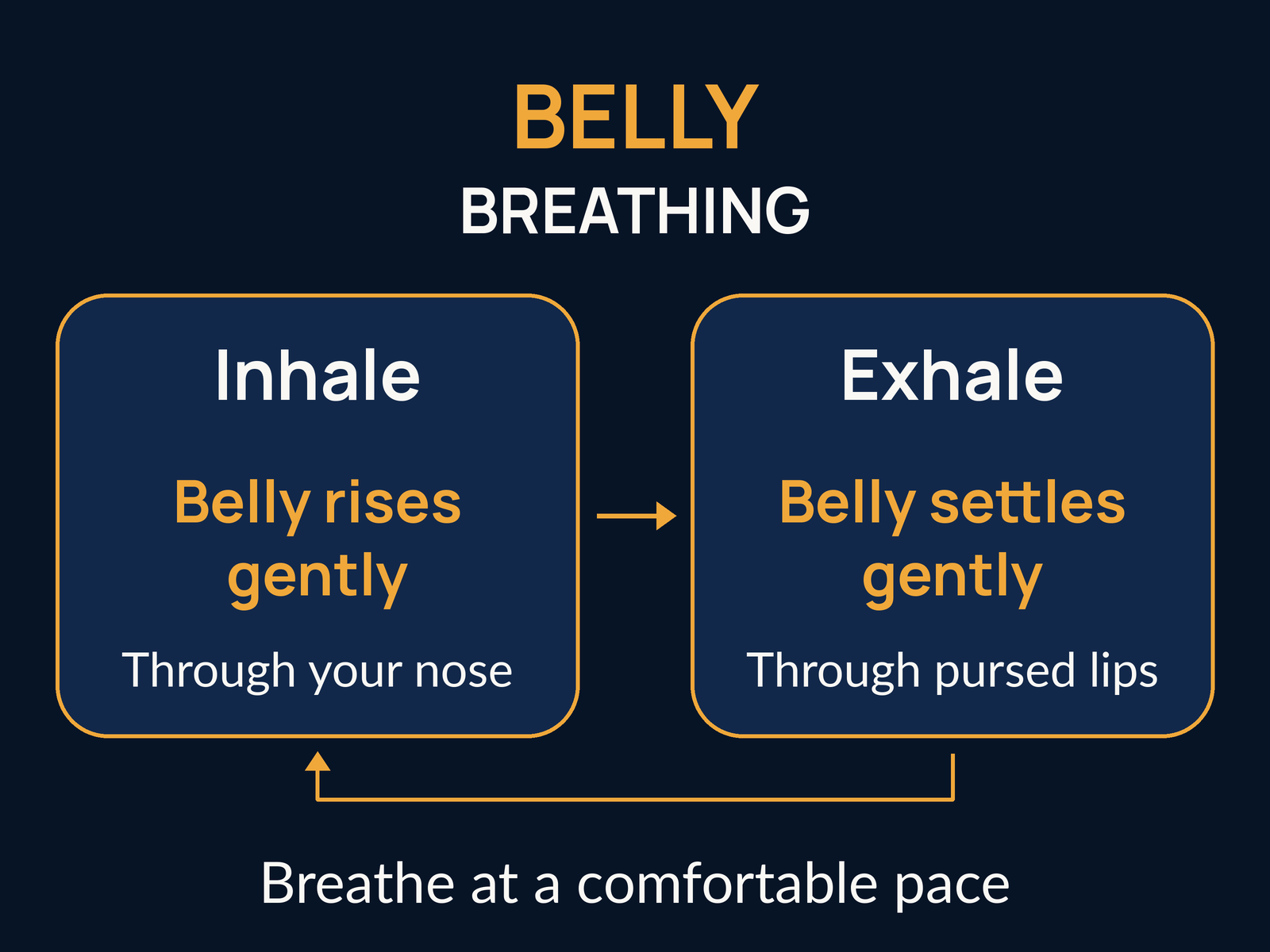
Belly breathing brings your attention to the small movement of your abdomen as you breathe. It has no required count or deliberate hold, so it offers a simple starting point when you would rather leave numbers out of your evening.
How to do it
- Sit comfortably, with your neck and shoulders relaxed.
- Place one hand on your upper chest and the other just below your ribs.
- Breathe in gently through your nose, allowing a small rise beneath your lower hand.
- Breathe out softly through lightly pursed lips as your abdomen settles.
- Continue for a few comfortable breaths, then rest your hands and breathe normally.
Cleveland Clinic’s diaphragmatic breathing guide describes this hand placement. You can also practice lying down with your head supported and knees bent, if comfortable. The demonstration shows the seated version.
Comfort tip: A small movement is enough. Avoid pushing your belly outward or taking a large breath just to move your hand.
2. Slow breathing with a longer exhale
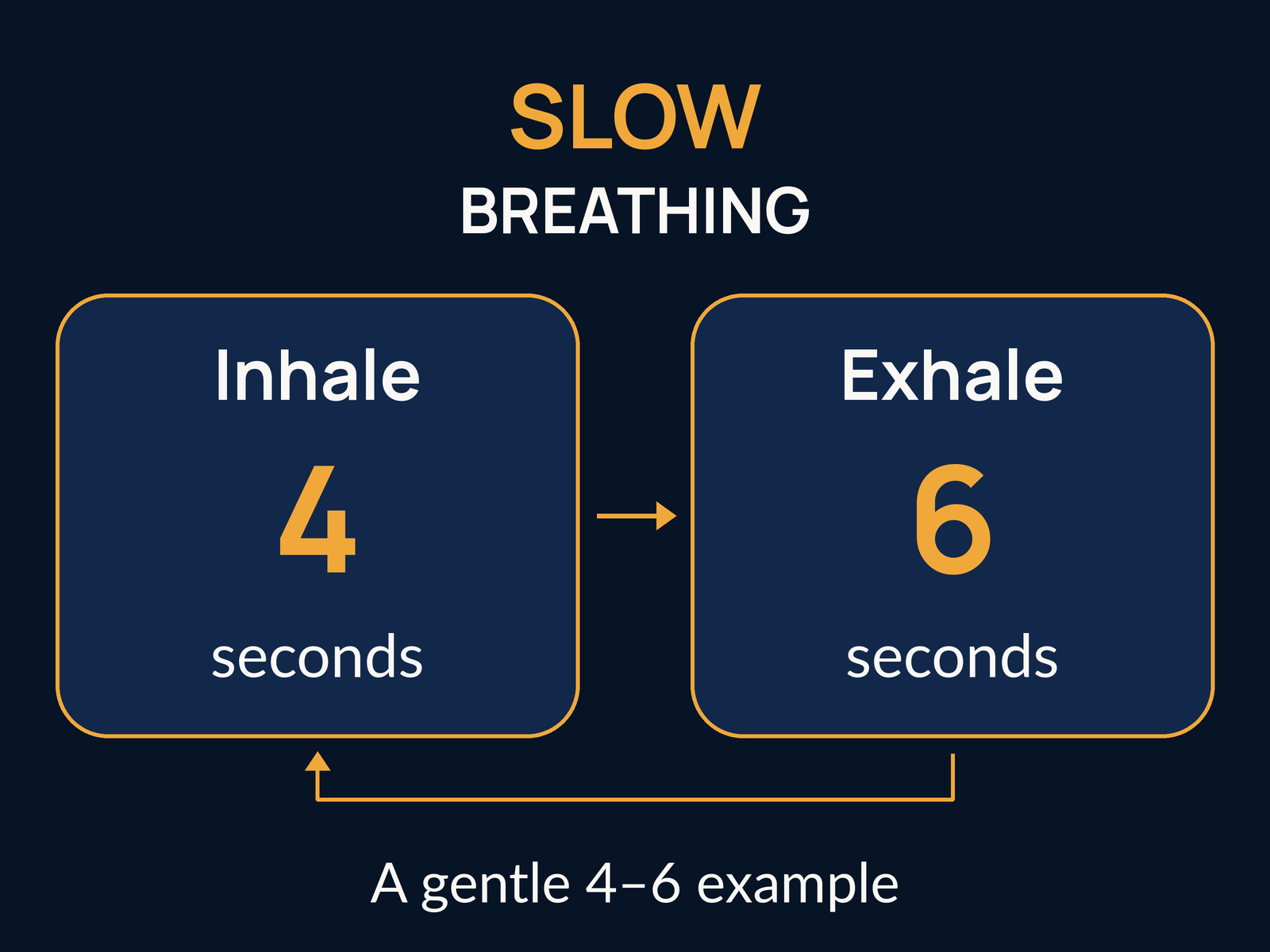
This exercise allows a little more time for breathing out than breathing in. There is no added hold. Our diagram and video show about four seconds in and six seconds out as an example; you do not need to match their pace.
How to do it
- Begin with a natural breath in your comfortable position.
- Inhale gently through your nose at an easy pace.
- Exhale smoothly through your nose or mouth, letting the out-breath last slightly longer.
- Begin the next inhale when you need to, without pausing to hold your breath.
- Try a few comfortable cycles, then let the timing go.
Cambridge University Hospitals’ breathing guidance includes counting examples of two in and three out, or four in and six out. Use the shorter pattern if it feels easier, or leave counting aside.
Comfort tip: Let the exhale finish naturally. Do not squeeze out extra air to reach the end of a count.
3. Optional 4-7-8 breathing
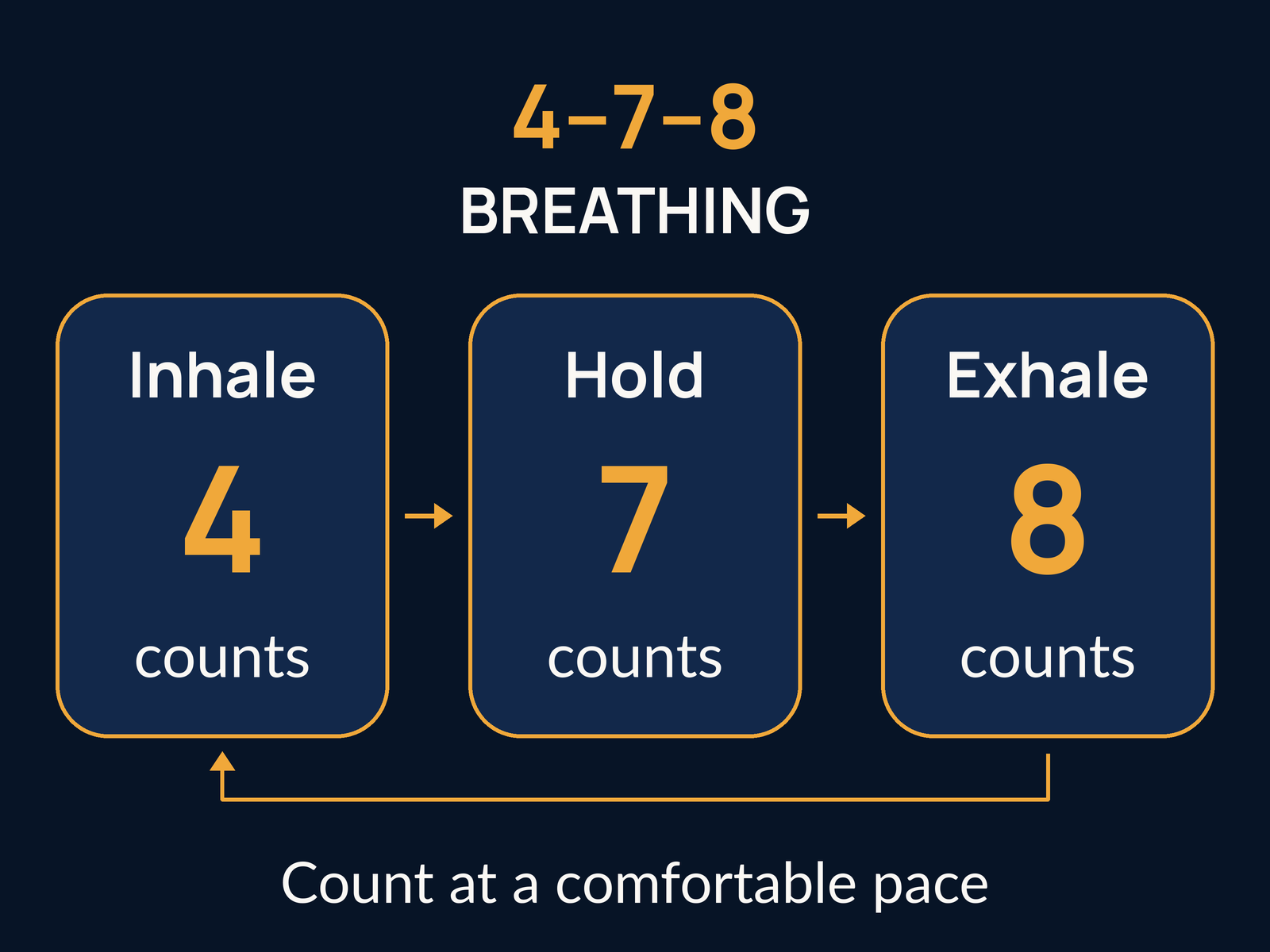
The 4-7-8 method adds a breath hold between the inhale and exhale. Choose it only if the hold feels comfortable. The numbers are counts, not a required number of seconds; keep your counting pace consistent throughout.
How to do it
- Sit comfortably and rest the tip of your tongue lightly behind your upper front teeth.
- Let a breath out through your mouth before you start counting.
- Close your mouth and inhale through your nose for four counts.
- Hold gently for seven counts, without straining.
- Exhale through your mouth for eight counts with a soft whooshing sound.
Begin with up to four comfortable cycles, following Cleveland Clinic’s 4-7-8 instructions. Stop sooner if you prefer. There is no additional hold after the exhale. Our complete 4-7-8 breathing guide explains the pattern in more detail.
Comfort tip: If the hold creates an urge to gasp or makes you tense, stop. You can choose belly breathing without a hold another time.
Build a bedtime routine you can return to
Keep the breathing practice small enough to fit into an ordinary evening. You might try it after washing your face or before opening a book. Choose one exercise instead of working through all three.
- Learn earlier: watch a demonstration before your wind-down time so you can practice later without following a screen.
- Make space: put work and messages aside, and choose a quiet place to sit.
- Keep it brief: start with a few comfortable breaths. Finish when you want to, rather than extending the practice until you feel sleepy.
- Move on gently: let the counting end and continue with a quiet activity or go to bed when you feel sleepy.
Breathing is one part of the wider routine. A regular sleep schedule and a bedroom that is dark, quiet, and comfortably cool also matter. The NHLBI guidance on insomnia treatment describes these habits alongside other ways to support sleep.
What if you are still awake afterward?
Being awake after an exercise does not mean you did it incorrectly. Avoid repeating more rounds simply to make sleep happen. If the practice leaves you comfortable, let it end without checking for an immediate result.
The NHS advice on falling asleep recommends avoiding the effort to force sleep. If you remain awake and unable to settle, get up if it is safe for you and do something quiet, such as reading. Return to bed when you feel sleepy.
When tomorrow’s tasks keep coming back to mind, writing them down earlier in the evening may help you leave them for another time. If focusing on breathing itself feels uncomfortable, stop. Our breathing exercises for anxiety guide includes an alternative that directs attention to your surroundings.
Can breathing exercises improve sleep?
Some people find a breathing practice helpful for relaxing before bed. That is different from establishing that a particular count treats insomnia or guarantees deeper sleep.
The NCCIH overview of relaxation techniques describes limited evidence for relaxation techniques used on their own for sleep problems. Research on the 4-7-8 method specifically is also limited, as the British Heart Foundation notes. There is no reliable promise that you will fall asleep within a set number of seconds.
For long-term insomnia, cognitive behavioral therapy for insomnia, or CBT-I, is usually recommended as the first treatment option. It addresses thoughts and habits around sleep and may include relaxation. A breathing exercise can be a supporting practice; it does not replace that assessment or treatment.
When sleep problems need more support
Speak with a healthcare professional if sleep difficulties keep affecting your daily life, have continued for months, or have not improved with changes to your habits. You do not need to wait months if the problem is already making it hard to cope. The NHS insomnia guidance explains when to seek help.
Also seek advice if you wake gasping or choking, someone notices pauses in your breathing during sleep, or you regularly feel very sleepy during the day. These can be signs of sleep apnea, which needs proper assessment. The exercises in this guide do not treat blocked breathing during sleep or replace prescribed treatment. Do not drive when you feel sleepy.
Let the practice have an ending
An evening breathing pause can be simple: choose one familiar pattern, keep it comfortable, then stop counting. You can return to the same exercise another night without making every session longer or more complicated.
For other rhythms, explore our five breathing exercises to calm your mind or browse the Breathing Guides. Use the approach that fits your evening, and leave room for rest to arrive in its own time.
Frequently asked questions
What is the best breathing exercise for sleep?
No single pattern is established as best for everyone. Start with a gentle option you can follow comfortably. Belly breathing avoids counting and holds; a longer exhale offers a simple rhythm if you prefer one.
How long should I practice before bed?
Start with a few easy breaths and keep the pause brief. For 4-7-8 breathing, begin with up to four comfortable cycles. You do not need to continue an exercise until you fall asleep.
Can I practice lying in bed?
Gentle belly breathing can be practiced lying down with support, if comfortable. You can also learn the exercises while seated before bedtime. Stop the deliberate practice when you want to rest; there is no need to monitor each breath as you fall asleep.
Can I use box breathing instead?
If you already find it comfortable, box breathing is another pattern to explore. It includes holds after both the inhale and exhale. Choose a continuous breathing exercise if you would rather avoid those pauses.
Will 4-7-8 breathing make me fall asleep in a minute?
It cannot promise that. Its precise effects on sleep are not well established. Use it as an optional relaxation practice, and seek help for ongoing sleep difficulties instead of treating the timing as a test.