

When your thoughts keep moving to the next task, a simple pattern can give your attention somewhere to settle. The box breathing technique follows four equal stages: breathe in, hold, breathe out, and hold again.
This guide walks you through the familiar 4-4-4-4 rhythm, with practical ways to keep it comfortable. You can use it as a quiet pause before returning to your day.
Start with a comfortable breath
Sit with your back supported and let your shoulders soften. Rest your hands wherever they feel comfortable. Keep your eyes open or close them if you prefer. Take a few ordinary breaths before you begin counting.
Keep the exercise gentle. Avoid forcing a large inhale, squeezing out every last bit of air, or pushing through a difficult hold. If you feel dizzy, breathless, or more anxious, stop and return to your usual breathing. Seek medical advice for symptoms that persist or concern you.
If you have a heart or breathing condition, check with your healthcare professional before trying breath-holding exercises. This guide supports general wellbeing and does not replace medical care. The British Heart Foundation’s breathing guidance includes further advice on practicing safely.
What is Box Breathing Technique?
Box breathing is a counted breathing exercise with four stages of equal length. Each stage represents one side of an imaginary square, which is why it is also called square breathing.
The usual pattern is inhale for four, hold for four, exhale for four, and hold for four. One trip around the square completes a round. You do not need to draw anything or use a timer; silently counting gives you a sequence to follow.
Practice the four-part rhythm
Use an even counting pace that feels manageable. Think of the pauses as gentle holds, with your face and shoulders relaxed.
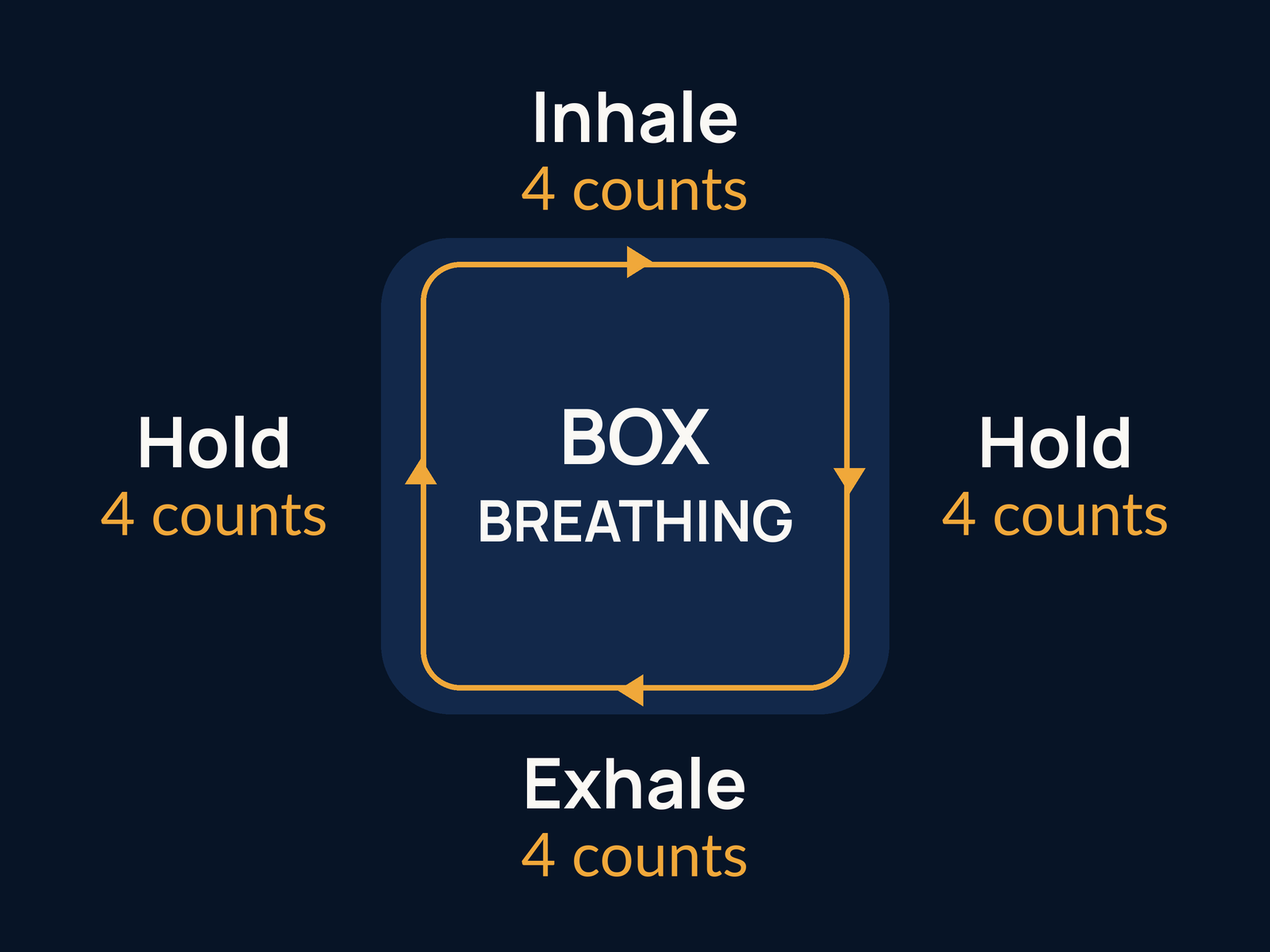
How to do Box Breathing Technique
- Let an ordinary breath out, without forcing it.
- Breathe in through your nose as you count to four.
- Hold gently for four counts, without tightening your jaw or lifting your shoulders.
- Breathe out smoothly for four counts.
- Pause for four counts, then begin the next inhale when comfortable.
Try three or four rounds, then allow your breathing to return to its natural rhythm. This starting pattern follows Cleveland Clinic’s box-breathing instructions.
Comfort tip: If keeping the rhythm makes you strain, stop counting. You can return to ordinary breathing or choose an exercise without holds.
If the holds feel uncomfortable
Some people prefer a continuous rhythm. Try a gentle inhale followed by a gentle exhale, with no deliberate pause between them. You can count evenly if that helps, or simply notice the movement of your breath.
The NHS breathing exercise for stress describes this kind of easy, unforced breathing. Our guide to five breathing exercises to calm your mind also includes equal breathing and belly breathing if you would like another option.
Choosing a different exercise is a useful adjustment. The aim is to find a practice you can do comfortably.
When to try box breathing
Choose a moment when you can pause safely and give the exercise your attention. You might try it:
- Before a demanding task: close unnecessary tabs, settle into your chair, and take a short breathing break before you begin.
- Between activities: use the transition from one part of your day to the next as a reminder to pause.
- Before a conversation or presentation: put your notes aside briefly and follow a few comfortable rounds.
Afterward, notice how you feel without expecting a particular result. You might feel more settled, or you might simply have taken a useful break. Choose one small next action, such as opening the document you need or writing the first sentence.
How box breathing may help
A repeated count provides a simple point of attention. It can make a breathing practice easier to follow when your thoughts feel scattered. That does not mean it will immediately improve concentration or remove stress for everyone.
In a small randomized study published in 2023, participants practiced breathing exercises or mindfulness for five minutes a day over four weeks. The box-breathing group reported short-term improvements in mood and anxiety after practice. The study’s stronger results compared with mindfulness were associated with a different technique, cyclic sighing.
These findings support further research; they do not establish box breathing as the best approach or as a treatment for an anxiety disorder. The NCCIH overview of relaxation techniques explains both the potential benefits and the limits of the evidence.
Make room for a quiet pause
Try placing this practice alongside something already familiar: sitting down at your desk, finishing a cup of tea, or preparing for your evening routine. Begin with a few comfortable rounds and notice whether the rhythm suits you.
Explore more breathing guides when you want another approach. A quiet pause can be something you return to with curiosity, one ordinary day at a time.
Frequently asked questions
Is box breathing the same as 4-4-4-4 breathing?
Yes. The numbers describe the four-count inhale, hold, exhale, and final hold. Square breathing is another name for the same pattern.
How long should I practice box breathing?
Start with three or four comfortable rounds. You can stop sooner. There is no requirement to continue for five minutes or to keep going until you feel calm.
Can box breathing help with anxiety?
Some people find it helpful as a short relaxation practice. Responses vary, and focusing on breathing can feel uncomfortable for some people. If anxiety persists or affects everyday life, speak with a qualified healthcare professional.
What if I cannot comfortably hold my breath?
Skip the holds and choose gentle breathing with a continuous inhale and exhale. If counting also creates tension, let it go. You do not need to finish the pattern before returning to normal breathing.