
When your mind feels busy, a few quiet breaths can create space to pause. Explore five breathing exercises to calm your mind, with clear steps and gentle rhythms you can adapt to your comfort.
Start with a comfortable breath
Sit in a supported chair and let your shoulders relax. Take a few natural breaths before choosing an exercise. Keep each breath gentle and comfortable; there is no need to fill or empty your lungs forcefully.
If you prefer to avoid breath-holding, begin with belly breathing or equal breathing. Treat the counts as a guide. If an exercise makes you feel dizzy, short of breath, or more anxious, stop and return to normal breathing.
If you have a medical condition that affects your breathing, ask your healthcare professional which techniques are suitable for you. These exercises are for general wellbeing and do not replace medical care.
1. Box breathing: a steady four-part rhythm
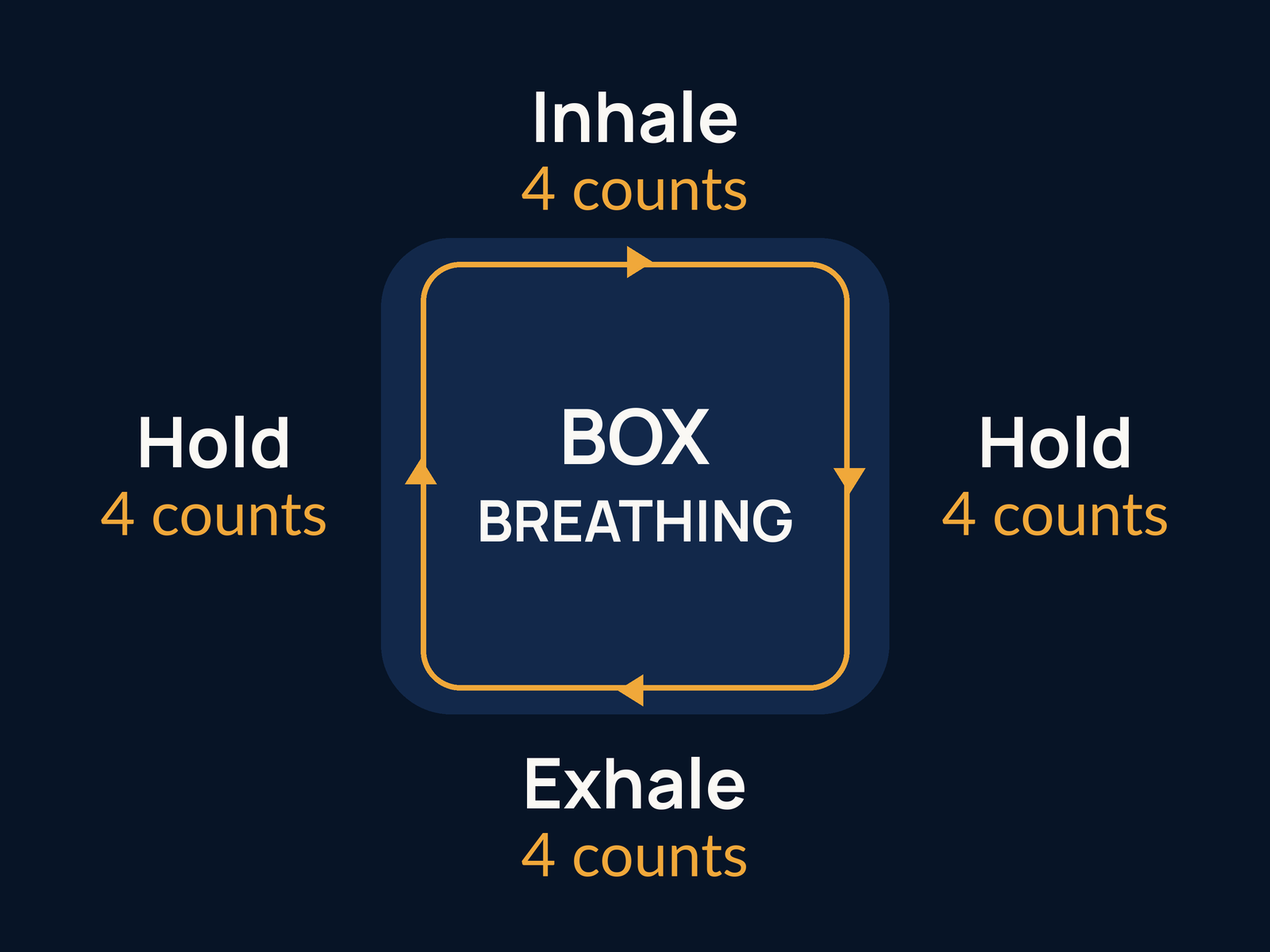
Box breathing follows four equal stages: breathe in, pause, breathe out, pause. The repeating pattern gives your attention a simple sequence to follow. You might choose it for a quiet break before returning to a demanding task.
How to do it
- Let an ordinary breath out and settle into a comfortable position.
- Breathe in through your nose while counting to four.
- Hold gently for four counts, without straining.
- Breathe out smoothly for four counts.
- Pause for four counts before starting the next round.
Try three or four rounds, then let your breathing return to its natural rhythm. This follows the basic pattern described by Cleveland Clinic.
Comfort tip: If the pauses feel difficult, choose equal breathing below. You can practice a steady rhythm without holding your breath.
2. 4-7-8 breathing: a counted practice with a longer exhale
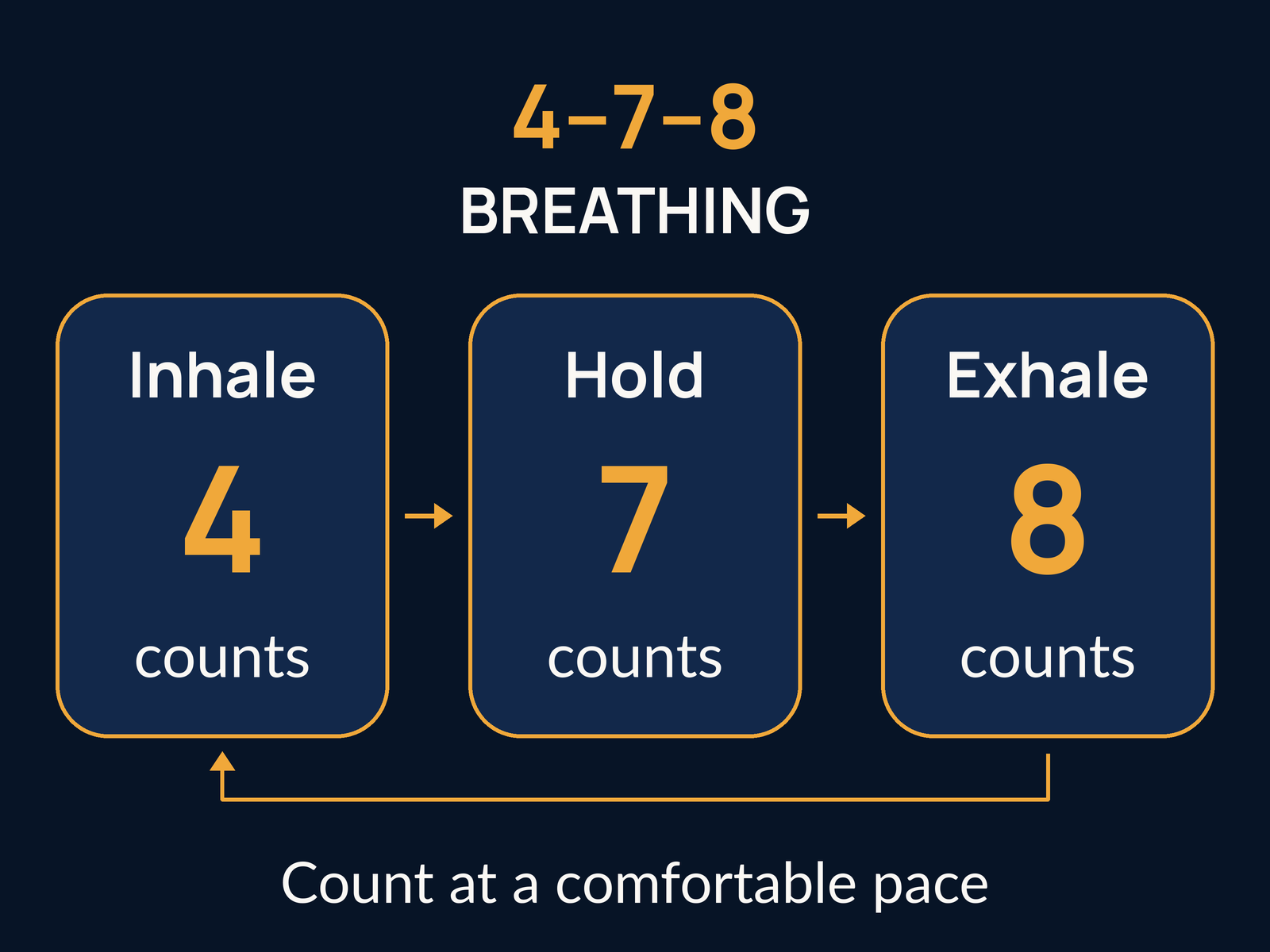
This exercise combines a four-count inhale, a seven-count hold and an eight-count exhale. The numbers are counts, not a requirement to spend that many seconds on each stage. Use a consistent counting pace that feels comfortable.
How to do it
- Sit comfortably. Rest the tip of your tongue lightly behind your upper front teeth.
- Breathe out through your mouth before beginning the sequence.
- Close your mouth and breathe in through your nose for four counts.
- Hold gently for seven counts.
- Breathe out through your mouth for eight counts, making a soft whooshing sound.
Complete up to four cycles while comfortable, following Cleveland Clinic’s 4-7-8 guidance.
Comfort tip: If the hold makes you strain or feel short of breath, stop and choose an exercise without pauses. There is no need to complete a round that feels uncomfortable.
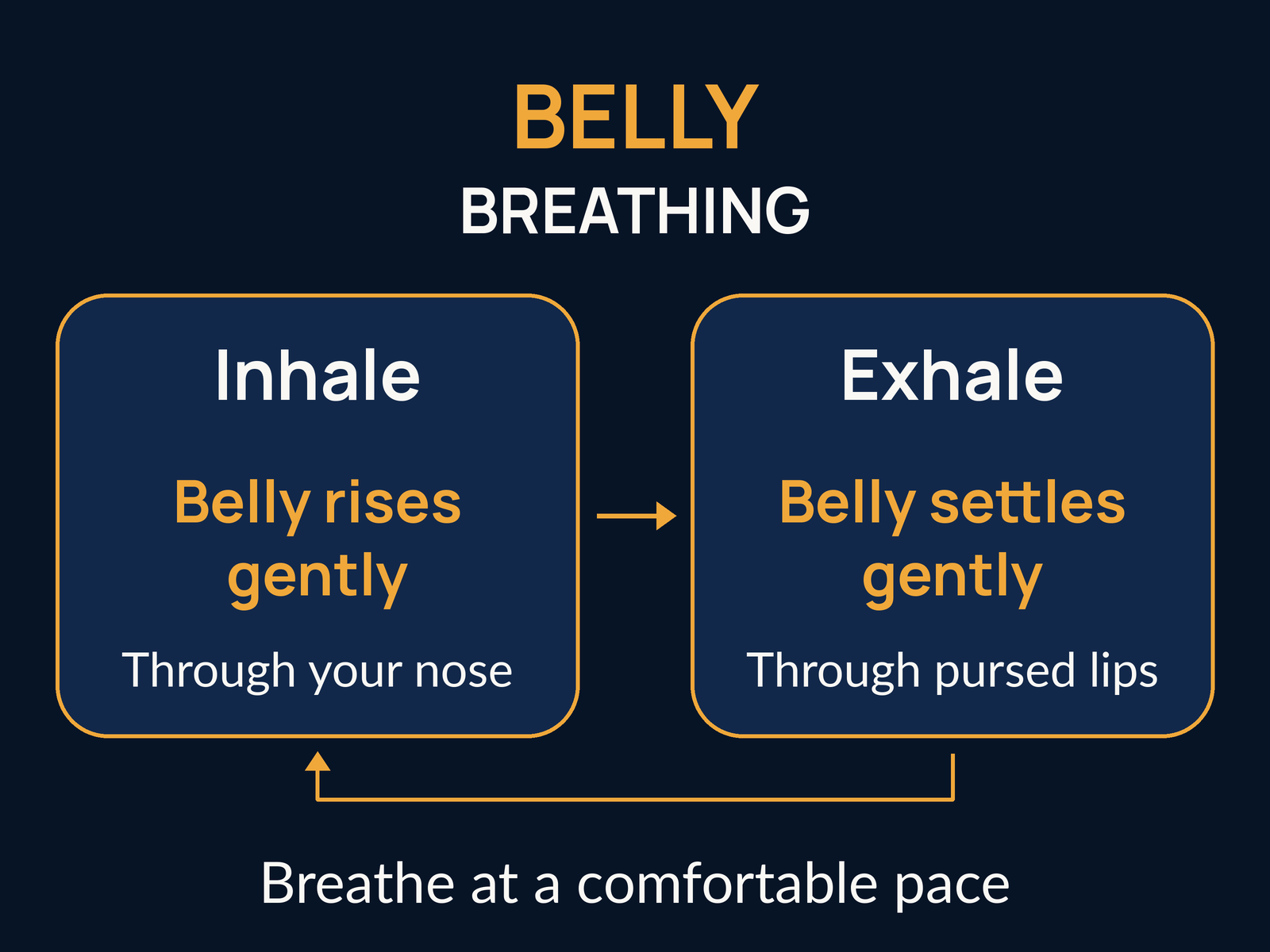
3. Belly breathing: notice the movement of your breath
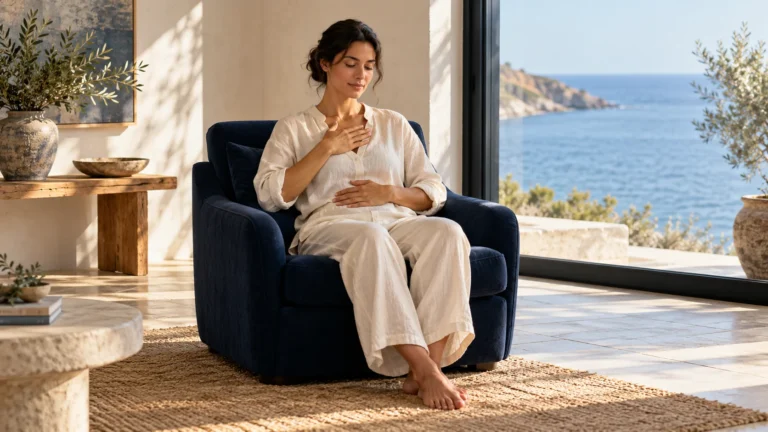
Also called diaphragmatic breathing, this practice draws attention to the gentle movement around your abdomen as you breathe. It can be a useful option when you would rather follow a physical sensation than count.
How to do it
- Sit with your back supported, or lie comfortably with your knees bent.
- Place one hand on your upper chest and the other just below your ribs.
- Breathe in through your nose. Notice your lower hand rise gently as your abdomen expands.
- Breathe out slowly through softly pursed lips, allowing your abdomen to move back inward.
- Repeat at an easy pace, keeping your neck and shoulders relaxed.
Aim for gentle abdominal movement with relatively little movement under your upper hand. Avoid trying to take the largest breath possible. You can begin with a few comfortable breaths and become familiar with the movement over time. See Cleveland Clinic’s diaphragmatic breathing instructions.
Comfort tip: Use your hands as a light guide. You do not need to press down or push your belly outward.
4. Equal breathing: matching the inhale and exhale
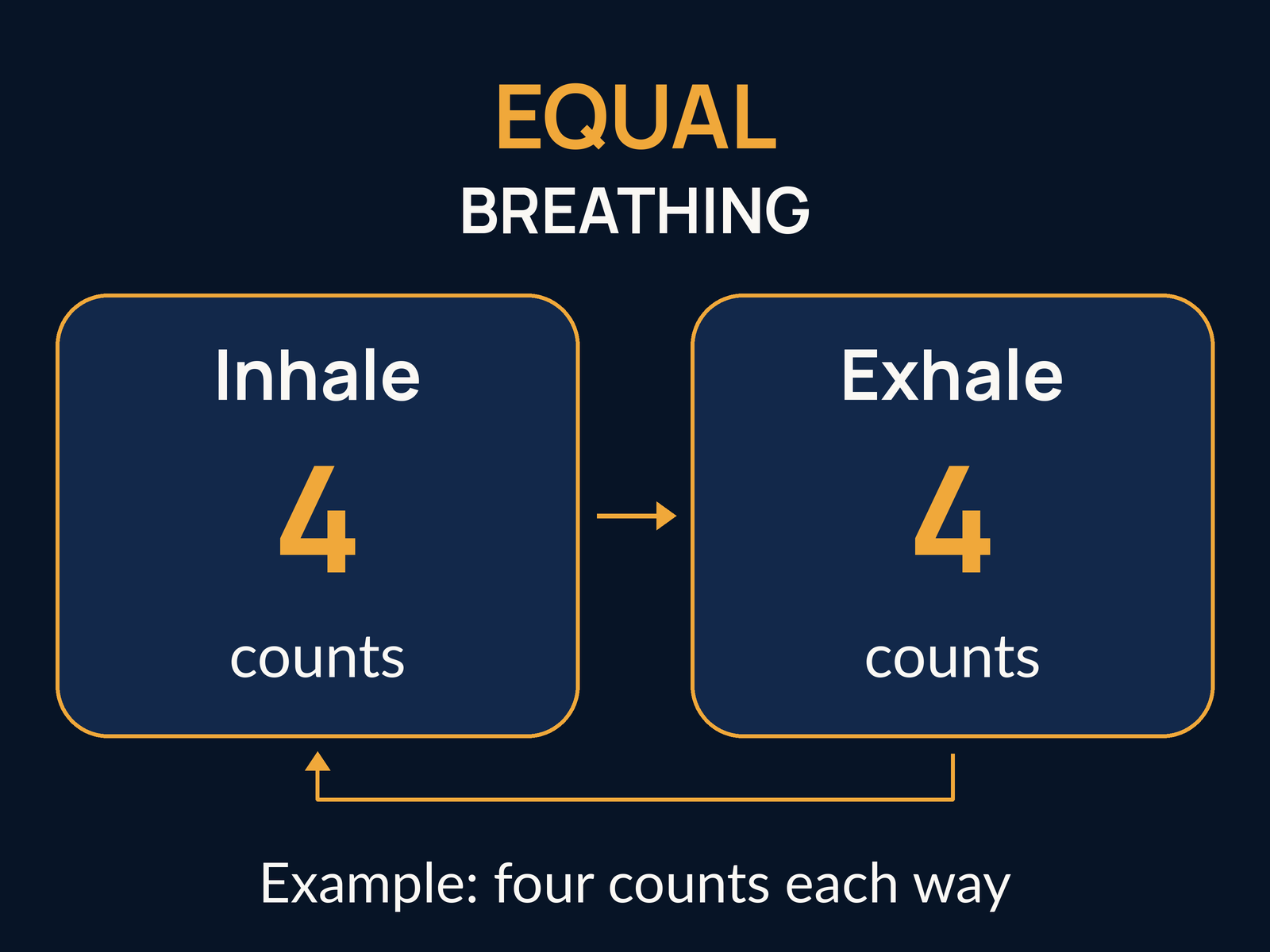
Equal breathing gives your inhale and exhale the same length, with no deliberate breath hold. The even rhythm offers a simple focus when you want to take a quiet pause.
How to do it
- Sit comfortably with your back supported and let your shoulders relax.
- Breathe in gently through your nose for a comfortable count, such as three or four.
- Let the breath out gently through your mouth for the same count.
- Move smoothly into the next inhale, without adding a deliberate pause.
- Repeat at an easy pace, keeping your neck and shoulders relaxed.
Begin with a few comfortable rounds, then return to natural breathing. The diagram and video use four counts each way as an example; the counts do not have to last one second. The NHS breathing exercise describes a similar gentle, even-count approach.
Comfort tip: If four counts feels too long, try three counts in and three out. If counting creates tension, let it go and return to your natural breathing.
5. Slow breathing: gently lengthening the exhale
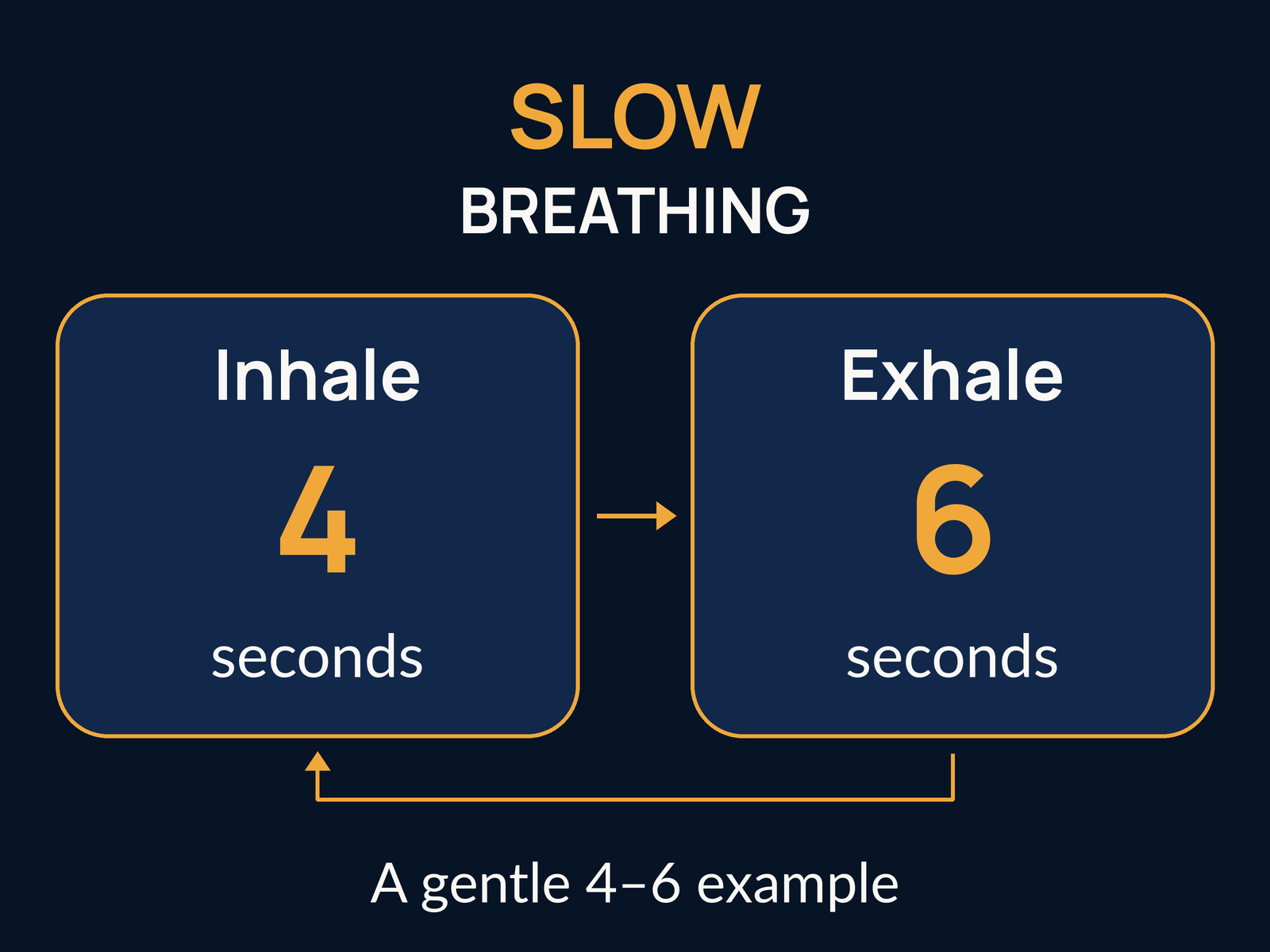
Slow breathing gives the out-breath a little more time than the in-breath, without a deliberate hold. You might use this gentle rhythm for a quiet break or as part of your evening wind-down.
How to do it
- Sit comfortably with your back supported and let your shoulders relax.
- Breathe in gently for about four seconds, keeping the breath easy.
- Breathe out smoothly for about six seconds, allowing the air to leave without pushing.
- Move into the next inhale without adding a deliberate pause.
- Repeat for a few comfortable cycles, then return to your natural breathing.
The diagram and video show a 4–6 rhythm as an example. You can shorten it to about two seconds in and three seconds out if that feels easier. These options follow the NHS trust’s rectangle-breathing guidance.
Comfort tip: Keep the longer exhale easy. If you need to gasp for the next breath, feel dizzy or become uncomfortable, stop and return to normal breathing.
How breathing exercises may help
Gentle breathing is one of several relaxation practices that may help with stress. Research is promising, but results vary, and a particular breathing rhythm cannot guarantee relief from anxiety or better sleep. The NCCIH overview of relaxation techniques explains the potential benefits and the limits of the evidence.
Make room for a quiet pause
Choose one exercise that feels comfortable and give it a familiar place in your day: between tasks, after your morning coffee, or before your evening routine. Begin with a few gentle breaths and notice how the practice feels.
Explore more breathing guides whenever you want to learn another approach. A quiet pause can be a small act of care you return to, one comfortable breath at a time.
Frequently Asked Questions
How long should breathing exercises last?
Most breathing exercises can be effective in just 2–5 minutes.
Are breathing exercises good for anxiety?
Yes. Slow breathing helps calm the nervous system and reduce anxiety.
Can I do breathing exercises every day?
Yes. Daily practice improves results and makes it easier to relax quickly.
Which breathing technique is best for beginners?
Box breathing and deep breathing are simple and easy to start with.
How long should breathing exercises last?
Most breathing exercises can be effective in just 2–5 minutes. Box breathing and deep breathing are simple and easy to start with.