An anxious moment can make even a short pause feel difficult. Breathing exercises for anxiety give you a simple practice to try: an easy breath, a familiar rhythm, and permission to stop whenever you need to.
This guide walks through three gentle options without breath holds. Use the written steps, diagrams, and demonstrations to explore what feels comfortable. You can choose one exercise; there is no need to complete them all.
Before you begin
Choose a place where you can pause safely. Sit with your back supported and let your shoulders settle. Keep your eyes open if that feels more comfortable. Take a few ordinary breaths before changing anything.
Avoid making each breath unusually large or trying to fill your lungs as much as possible. If you feel dizzy, short of breath, or more anxious, stop the exercise and return to your usual breathing. Seek medical advice for symptoms that persist or concern you.
If you have a heart or breathing condition, or you are unsure whether these exercises suit you, ask your healthcare professional. The British Heart Foundation’s breathing guidance explains when to stop and seek help. These exercises support general wellbeing and do not replace treatment for an anxiety disorder.
1. Gentle equal breathing
Equal breathing uses a similar length for the inhale and exhale, with no deliberate hold. It offers a straightforward pattern when you would like a count to follow. The diagram and video show four counts each way as an example.
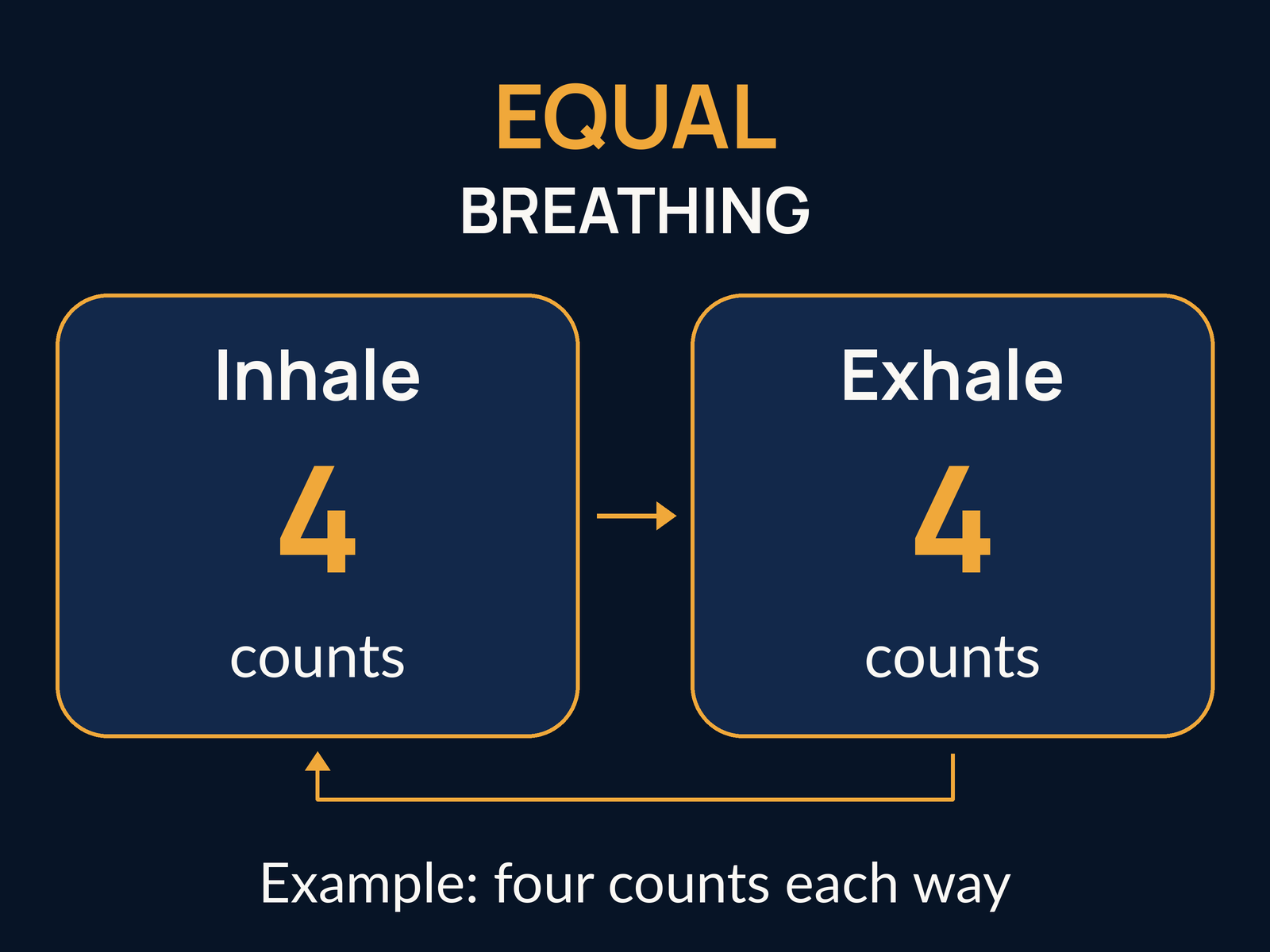
How to do it
- Settle into your chair and rest your hands comfortably.
- Breathe in gently through your nose, counting at an easy pace.
- Let the breath out softly through your mouth for the same number of counts.
- Move smoothly into the next breath without adding a pause.
- Try a few comfortable rounds, then let the counting go.
The NHS breathing exercise for stress uses gentle, even counting. It does not require this particular four-count example. Use a shorter count or leave counting out if that feels easier.
Comfort tip: The numbers are there to guide you. They are not a target you need to reach before you are allowed to breathe out.
2. Belly breathing
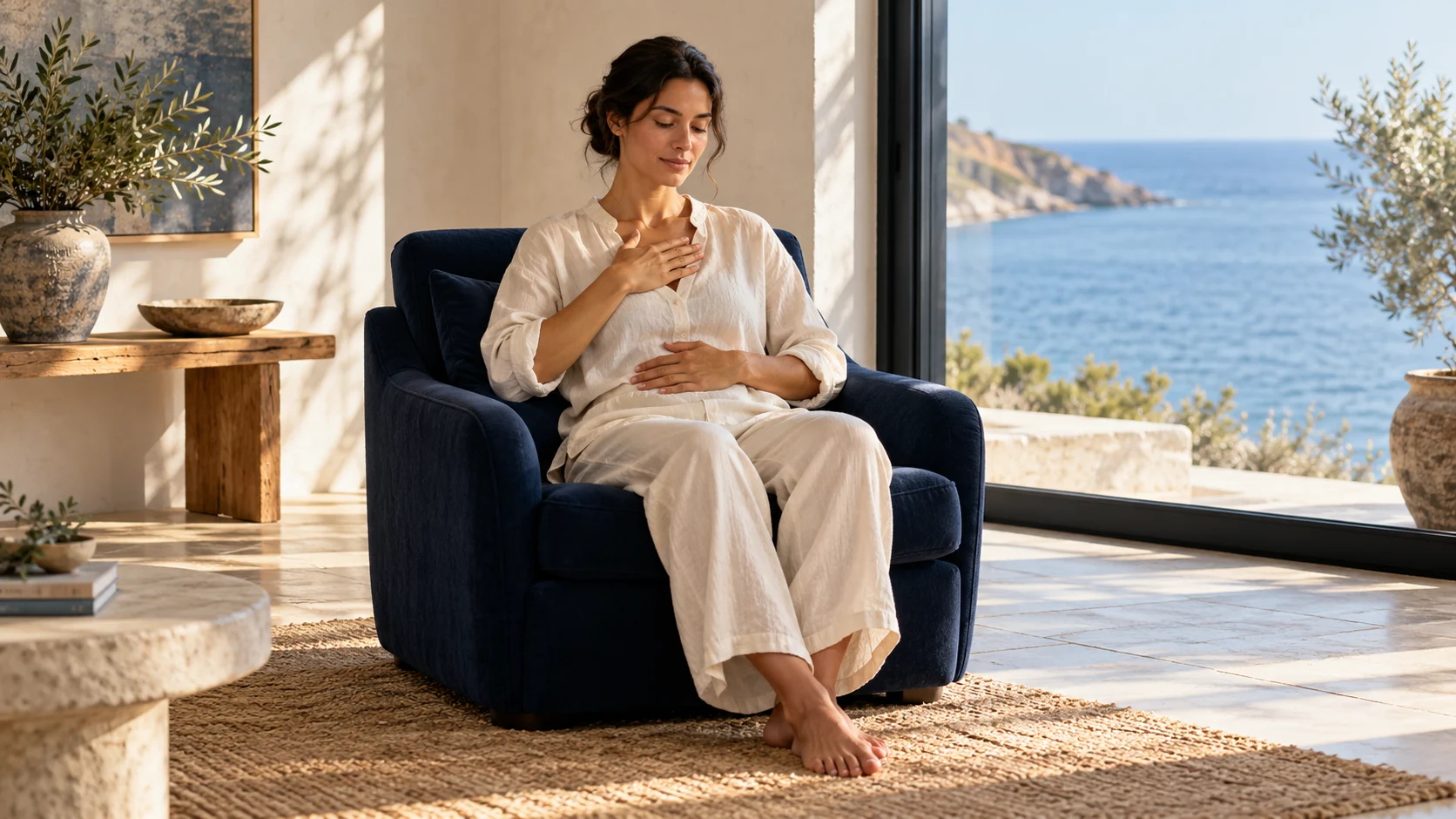
Belly breathing, also called diaphragmatic breathing, brings your attention to gentle movement around your abdomen. You do not need a timer or a particular count. This may suit you when keeping track of numbers feels distracting.
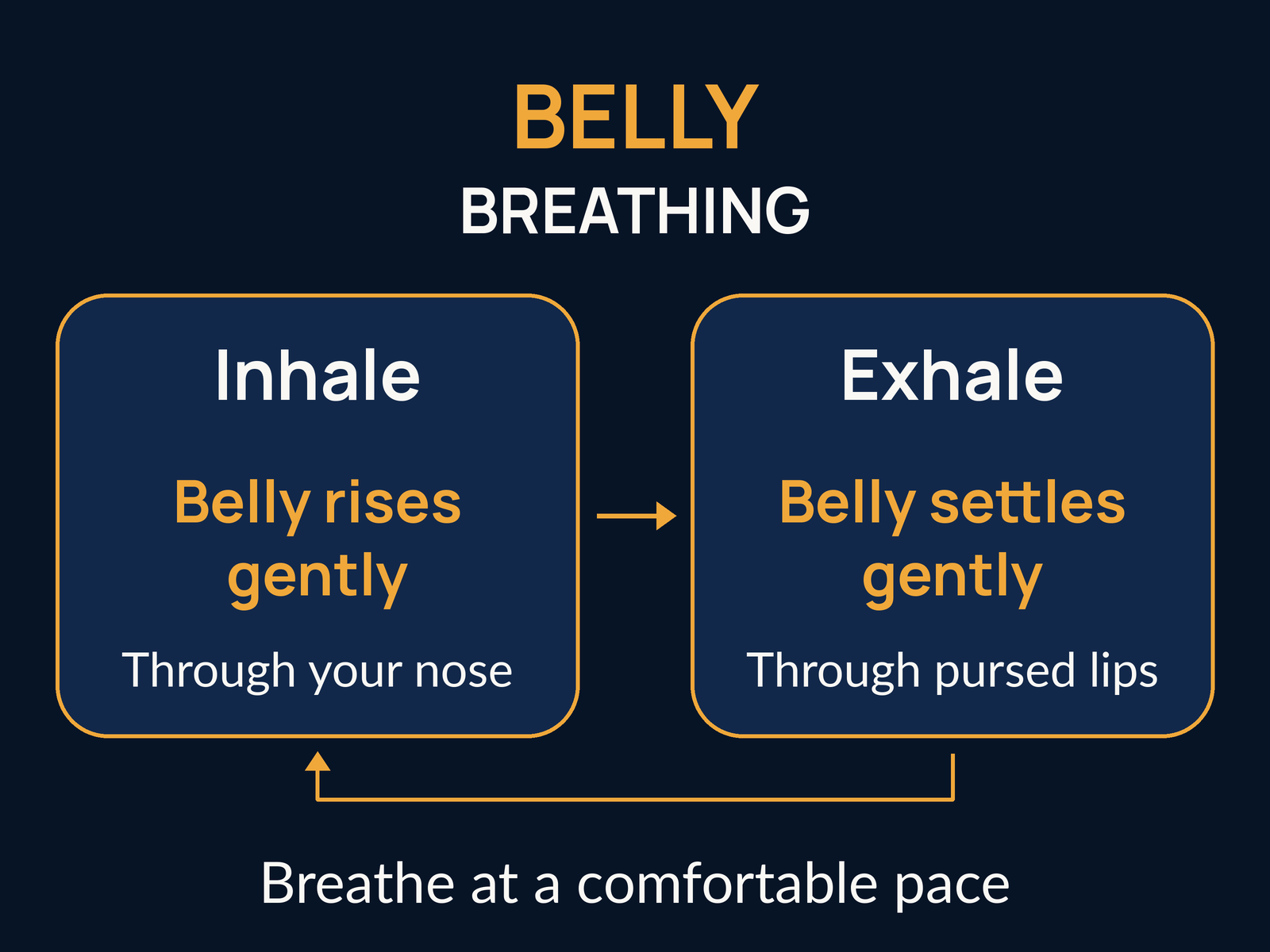
How to do it
- Sit comfortably with your shoulders and neck relaxed.
- Rest one hand on your upper chest and the other just below your ribs.
- Inhale gently through your nose, noticing a small rise beneath your lower hand.
- Exhale softly through lightly pursed lips as your abdomen settles.
- Continue for a few easy breaths, then rest your hands and breathe normally.
Cleveland Clinic’s diaphragmatic breathing guide explains the hand placement and breathing movement. Your hands provide feedback; they should not push your chest or abdomen into position.
Comfort tip: Allow a small, natural movement. Avoid deliberately pushing your belly outward or drawing in more air to make the movement easier to see.
3. Slow breathing with a comfortable longer exhale
This pattern lets the out-breath last a little longer than the in-breath, without a hold. Our demonstration shows an inhale of about four seconds followed by an exhale of about six. Treat that timing as an example, not a requirement.
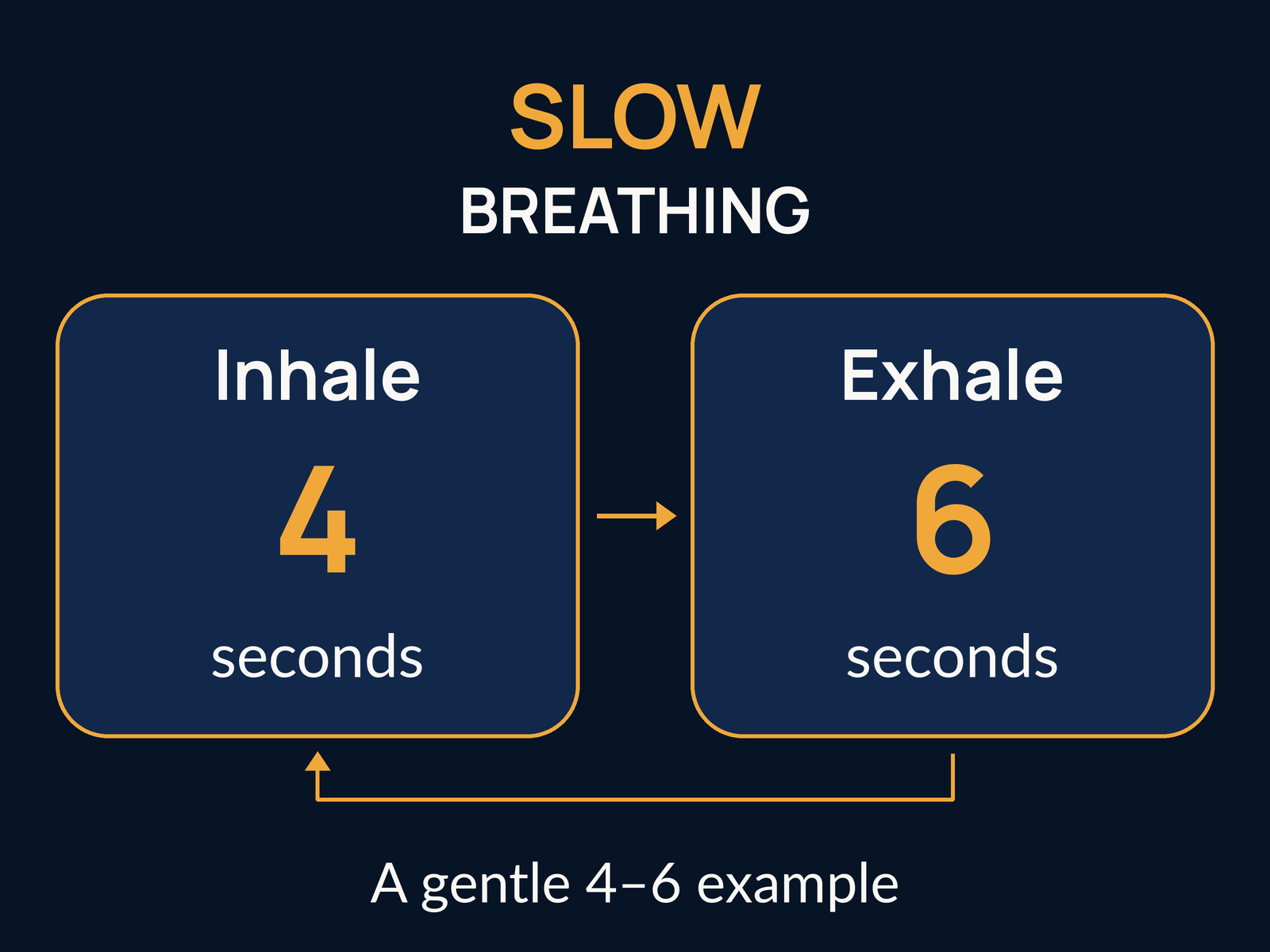
How to do it
- Begin with an ordinary, comfortable breath.
- Inhale gently through your nose at an easy pace.
- Let the air out smoothly through your nose or mouth, allowing slightly longer for the exhale.
- Start the next inhale when you need to, without holding after the exhale.
- Repeat for a few comfortable cycles, then return to your natural rhythm.
Cambridge University Hospitals’ breathing guidance includes a shorter-inhale, longer-exhale pattern. It gives counting examples of two in and three out, or four in and six out.
Comfort tip: Avoid squeezing out the last of your breath to finish a count. Shorten the pattern or stop if the longer exhale feels effortful.
Which breathing exercise should you choose?
Start with the option whose instructions feel easiest to follow. You might prefer equal breathing when a simple count is helpful, belly breathing when you would rather avoid numbers, or a longer exhale when that rhythm already feels comfortable.
There is no need to progress through the exercises in order. Try one at a quiet time, then decide whether you would like to use it again. You can watch the demonstration first and practice afterward, away from the screen.
Our separate guides explain box breathing and the 4-7-8 breathing method. Both include breath holds. You can stay with a continuous breathing exercise if holds feel uncomfortable.
If focusing on breathing makes anxiety feel worse
Stop the exercise. You do not need to keep watching your breath or complete another round. Let your attention move to something around you instead.
One option is to notice the room through your senses. Look for five things you can see, four you can touch, and three you can hear. If helpful, continue with two things you can smell and one you can taste. Adapt this to the senses available to you, without searching for a perfect answer.
Cleveland Clinic’s grounding guide describes this approach. You could also name the colors of nearby objects or notice the texture of your chair. Choose something simple that brings your attention outward. If these experiences recur or feel distressing, discuss them with a qualified professional.
How breathing exercises may help
Breathing practices are one type of relaxation technique. Some people find them useful for settling into a pause or giving their attention a manageable task.
The NCCIH overview of relaxation techniques describes promising findings alongside limitations in the research. Studies use different methods, and many have weaknesses. Evidence about relaxation generally does not establish that one breathing count will work best for everyone.
You may notice a change, or you may not. Relaxation exercises can sometimes increase anxiety. A practice that feels uncomfortable does not need to become part of your routine, and it is not a substitute for professional care when anxiety is persistent or disruptive.
When to seek more support
Speak with a healthcare professional if anxiety keeps affecting your sleep, work, relationships, or everyday activities, or if your own attempts to manage it are not helping. The NHS guidance on anxiety, fear, and panic explains ways to seek support.
Do not assume new or unfamiliar physical symptoms are caused by anxiety. Severe difficulty breathing, a tight or heavy chest, or sudden confusion needs urgent medical attention. Contact your local emergency service rather than continuing an exercise. The NHS guidance on shortness of breath describes symptoms that need immediate help.
Make room for a quiet pause
Choose an ordinary moment to try the practice: after closing your laptop, before opening a book, or while sitting down between tasks. Let the cue be a reminder to pause, rather than a demand to feel different.
When you finish, allow your breathing to find its own pace and return to what you were doing. For a broader introduction, explore our five breathing exercises to calm your mind, or browse the Breathing Guides.
Frequently asked questions
What is the best breathing exercise for anxiety?
There is no single pattern that suits everyone. An easy rhythm without holds is one place to start. Choose an exercise that feels manageable, and stop if it makes you feel worse.
How long should I practice?
Begin with a few comfortable breaths. You can make the pause longer if you wish, without forcing yourself to reach a set duration. Finishing a timer is less important than keeping the practice comfortable.
Do I need to close my eyes?
No. You can keep your eyes open and rest your gaze on something nearby. Choose the position that helps you feel comfortable in the space around you.
Can I try these exercises before bed?
You can include a comfortable exercise in your evening routine. Keep it brief if you prefer, then let the counting end. It does not need to become another task you must complete before sleep.
Can breathing exercises replace anxiety treatment?
No. They can be a supporting practice, but ongoing anxiety deserves appropriate assessment and care. Continue any treatment you have been prescribed and discuss concerns or changes with your healthcare professional.